Digital Thermostats
What are the comparisons between Wi-Fi and Zigbee protocol for smart homes?
But Wi-Fi has its limitations. Devices that run solely on Wi-Fi networks need to be charged frequently, think as laptops, smartphones, and even smart speakers. Additionally, they are not self-identifying and you must manually enter the password for each new wireless device. If for some reason, your network connection slows down, it can turn your entire smart home experience into a nightmare.
When it comes to wireless connections, Bluetooth has always been the second choice. However, in recent years, we have seen exponential growth in the use of Zigbee, another IoT protocol. Smart light manufacturer Philipshue is an early supporter of the Zigbee open interoperability standard. Many smart home companies have followed suit, and Zigbee is now almost as popular as Wi-Fi.
Let’s explore the relative pros and cons of using Zigbee or Wi-Fi. Understanding these differences is crucial as it can greatly impact your purchasing decision for a specific smart home product.
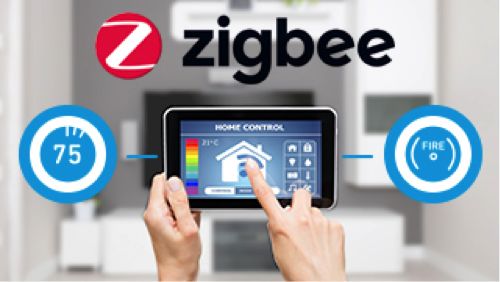
What are the advantages of Zigbee?
1. Front and rear compatibility
According to the Zigbee Alliance, a key highlight of Zigbee product certification is that they are designed to be compatible with legacy and future versions of Zigbee. The latest ZigBee 3.0 devices allow backward compatibility, while older Zigbee devices can join the Zigbee 3.0 network according to allowed security policies and through over-the-air updates. With Zigbee, if you already have smart home devices deployed in your network, you can be sure that they will be compatible with the new Zigbee nodes.
Of course, Wi-Fi does not fully have this advantage. While you can use Wi-Fi 6 with previous standards, there is no forward compatibility for devices designed for earlier versions of Wi-Fi.
2. Fault tolerance
Both Zigbee and Wi-Fi follow different network topologies. Zigbee is arranged around a grid, with each node talking not only to the "coordinator" but also to other nodes, thereby increasing fault tolerance. If one of the nodes is disrupted/damaged, it will not affect the rest of the network. Industrial automation (IIoT) uses networks like Zigbee and Z-wave for a reason. The same benefits apply to smart homes.
Wi-Fi networks typically use a "star" topology of routers and repeaters (although Wi-FI mesh structures are possible). If a Wi-Fi repeater in the network breaks, the failure is propagated to all end-node devices connected to that repeater.
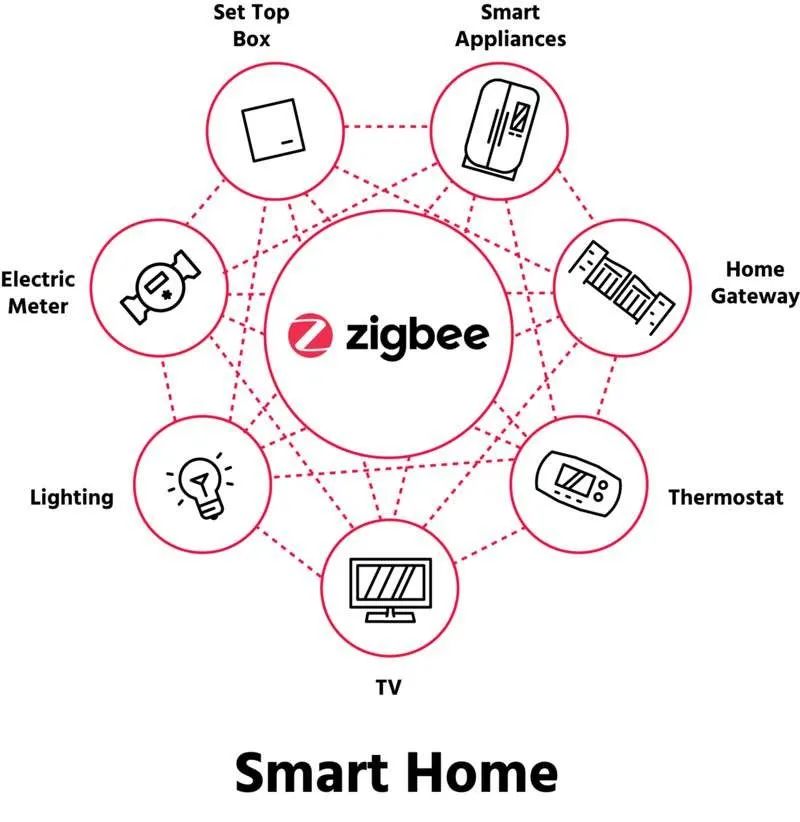
3. Expand coverage
Zigbee allows each Zigbee node to act as a repeater, rather than manually adding repeaters as in a Wi-Fi network. As long as the ZDO is powered on, it can act as a relay point to transmit signals to end nodes. Therefore, the more Zigbee devices you buy, the wider your coverage will be (although you should worry about signal interruptions caused by too many Zigbee nodes).
4. No need to enter the password every time
When using a Wi-Fi network, you need to enter a password every time you add a new device.
On the other hand, the Zigbee protocol supports a feature called "Device Discovery Service" because all Zigbee endpoints have unique hexadecimal device IDs. Client nodes in the network are automatically discovered and connected, eliminating the need to manually enter passwords.
5. Reduce dependence on the cloud
Compared with Wi-Fi-compatible devices, Zigbee end-node devices are less dependent on cloud updates. All Zigbee devices operate on their mesh, although they do offer over-the-air (OTA) update services. This way, they are vendor-agnostic. Therefore, if a device manufacturer discontinues support for one or more features, there will be no impact on field operations of existing deployments.
6. Low power consumption equipment
As mentioned above, Zigbee devices have been designed to operate in low-power modes. This provides more standby time and more continuous operation. Longer battery life comes at the cost of bitrate, and with a top speed of 250 bit/second, you can only use Zigbee for home automation.
7. Supported device types
Zigbee is becoming a common choice for HVAC control, lighting management, energy management, lighting monitoring, environmental monitoring, and commercial buildings. Some common applications for Zigbee include wireless and multi-function gateways, smart switches, dimmers, LED light bulbs (such as Philip Hue lights), and other multi-purpose components.
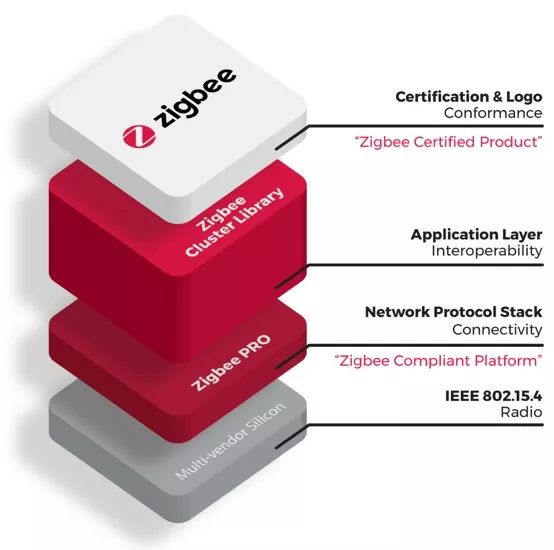
What are the advantages of Wi-Fi compared to Zigbee?
1. Cost
It’s no secret that Zigbee smart devices are more expensive than Wi-Fi devices designed for the same purpose. This is because Wi-Fi devices have been on the market for a long time. Likewise, more device manufacturers may support Wi-Fi devices than Zigbee for a given application. This may limit your options. However, the cost of Zigbee is reduced since you don't need to purchase repeaters separately. Each Zigbee device acts as an extension repeater.
2. Area
The challenge with most Zigbee devices is that they work better over short distances due to shortwave physics. In comparison, long-range Wi-Fi can support distances of up to 100 meters. This means they are less susceptible to signal interference than Zigbee devices. Zigbee signals are weak anyway, and if you have too many Zigbee devices within a short distance, you may experience increased distortion and signal degradation. Modern Wi-Fi networks overcome this obstacle by improving the quality of service, making them less susceptible to signal issues.
3. Equipment integration
Compared with Zigbee, it is easier to integrate Wi-Fi connectivity on IoT devices. Wi-Fi chips are assembled on almost all IoT boards and help connect to any wireless access point.

4. Safety
Compared with Zigbee, Wi-Fi is more secure. Since Zigbee is an open standard technology, the compatibility between Zigbee devices from different manufacturers is better than Wi-Fi. On the other hand, all Zigbee devices speak the same common language, so applications from different vendors are not compatible with each other, which creates greater security risks.
5. Consumer IoT applications
Wi-Fi provides higher bandwidth and is undoubtedly more suitable for consumer IoT applications, such as smart speakers, smart bedside tables, and other daily activities. You can't even send email using Zigbee, so it's not suitable for any consumer IoT applications that might require constant user interaction. They are indeed better suited for smart home automation.
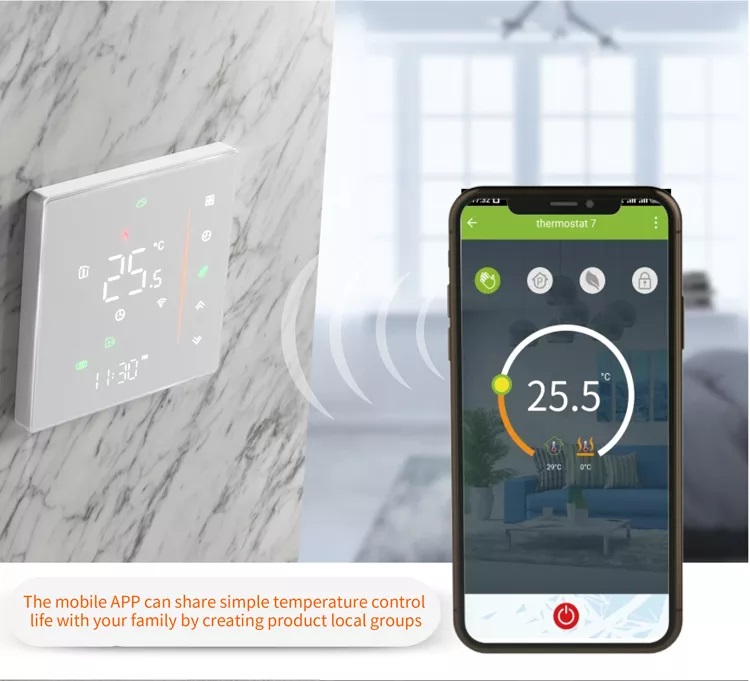
Wi-Fi vs. Zigbee: Which is better for smart homes?
In the above comparison of Zigbee and Wi-Fi, we explored the pros and cons of each. If you want more autonomy and freedom from vendor control, Zigbee has more support, but it's too early to declare Zigbee the winner of our competition. Both network protocols have their standards for acceptable smart home use. If you're just starting out building a smart home, it's best to use Wi-Fi-compatible devices that work with Alexa, Google Home, and other speakers.
However, if you want to make some improvements to your home with smart lights, curtains, switches, thermostats, and other building automation activities, having Zigbee-compatible devices and a smart home hub will better serve your needs.