Digital Thermostats
What types of thermostats are available for floor heating?
Floor heating can be divided into two types: electric heating and water heating. The main components of electric heating are heating cables (or electric heating films and other electric heating loads laid on the ground) + thermostats. This system is relatively simple. The main components of water heating are hot water source equipment + water collector (and terminal accessories ) + floor heating pipes + electric valves and actuators (or electric heating valves) + thermostats, the material selection, construction technology, and operation and maintenance are more complicated.
The commonality between the two requires a thermostat. It can be seen that the floor heating thermostat is very important in the floor heating system.
In this article, we will introduce to you the types of floor heating thermostats currently on the market and their various characteristics.
1. Mechanical thermostat
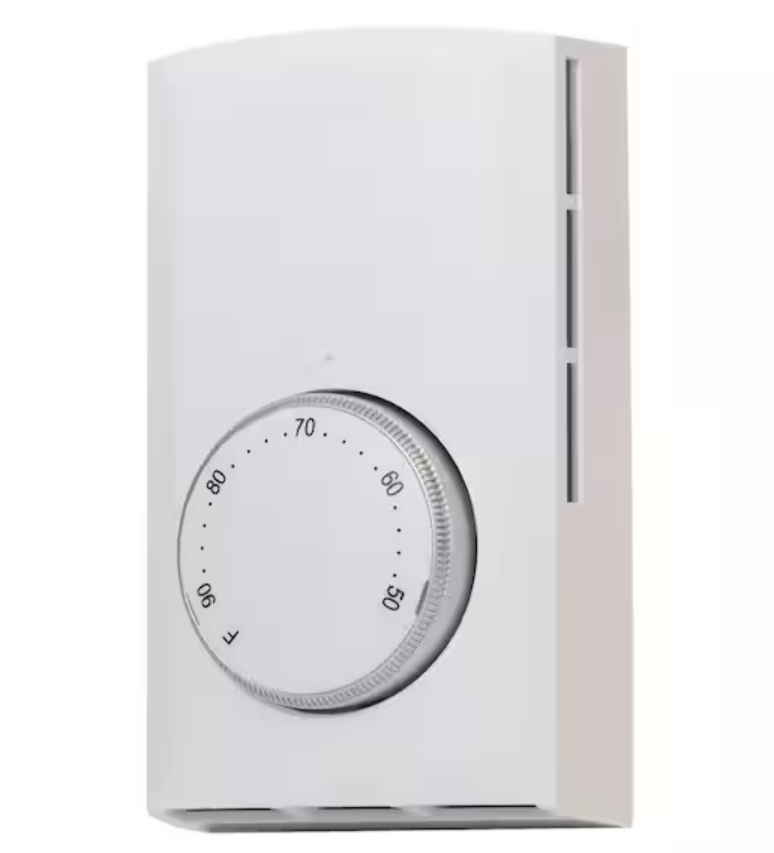
The mechanical thermostat uses a sensitive gas membrane box or a thermal bimetallic sheet as the temperature sensing element to form a temperature control switch with mechanical contacts. Its advantages are low cost, simple installation and use, and good long-term reliability; its disadvantages are large temperature control switch deviation (generally greater than ±3°C), intuitive display, and single function.
2. Digital Thermostat
The temperature sensing element of the electronic thermostat is a negative temperature coefficient thermistor (NTC), and the relay contact controls the output. Distinguished by the size of the contact current, the conventional specifications are 3A, 5A, 8A, and 16A, which can meet the control requirements of water heating systems and electric heating systems with large loads (below 3500W).
It has the advantages of low cost, simple operation, and high-temperature control accuracy (±1°C).
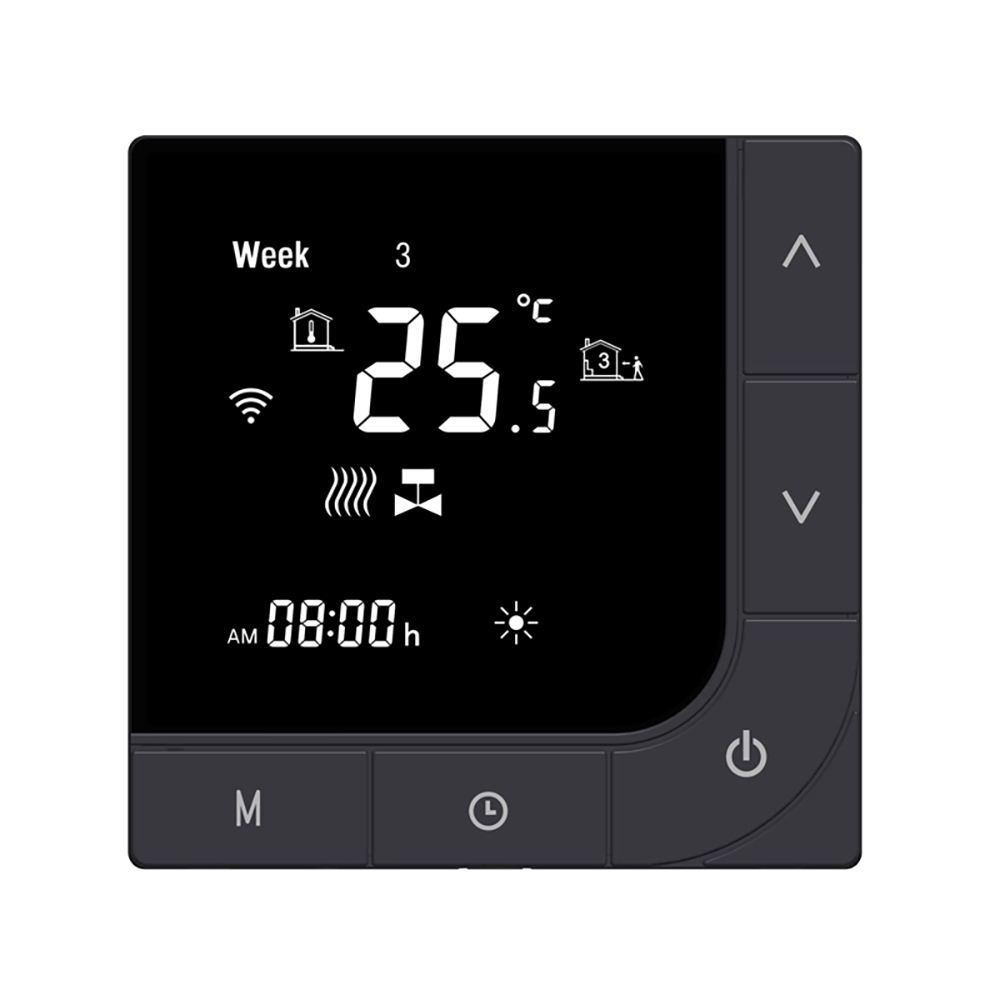
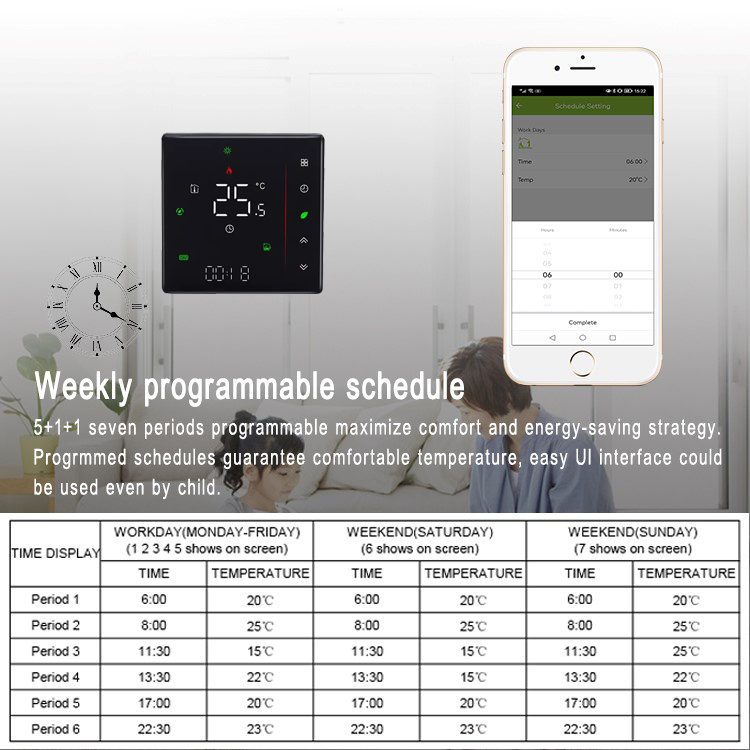
It is superior to mechanical thermostats in terms of functions. For example, the temperature sensor can be installed in various locations, with built-in and external (external ground probe) or both built-in temperature control and external temperature limiter; it also has energy-saving programming functions.
3. LCD thermostat
The LCD thermostat is an upgrade based on the electronic thermostat with a more fashionable appearance. It also has intelligent functions such as connecting to WIFI, Modbus, BACnet, Lora, and other functions.
4. Learning smart thermostat
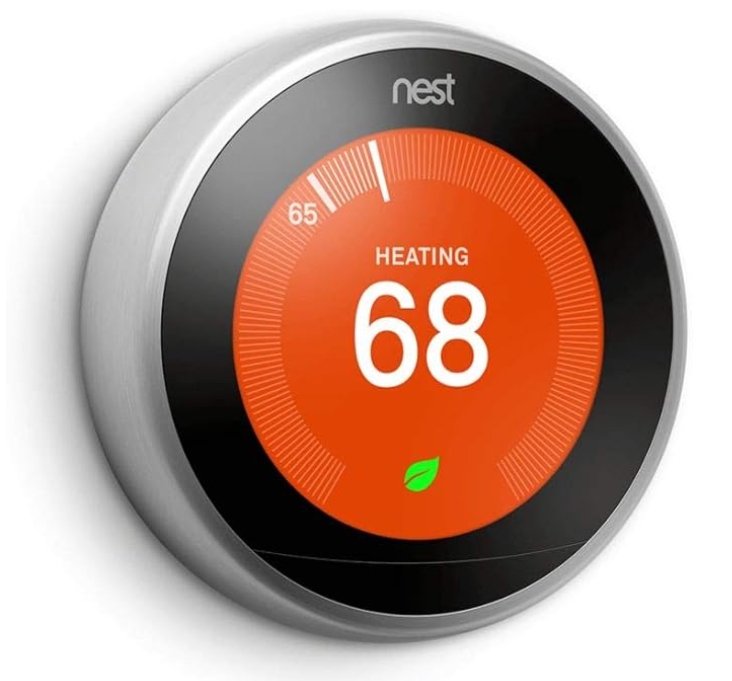
The NEST thermostat developed by some North American brand companies such as Google is a smart thermostat used by millions of American households. The Nest thermostat is compatible with HVAC, VRV inverter, hanging & cabinet units, floor heating & fresh air. and almost all comfort systems. By recording the owner's usage habits and life patterns at home for more than 10 days, the user's temperature adjustment habits are learned, and through cloud computing and big data, the work of the home comfort system is intelligently adjusted, which not only effectively saves energy, but also brings artificial intelligence constant temperature experience. There are also other brands such as ECOBEE, Honeywell, and Johnson Control, which all have learning smart thermostats with similar functions.