Digital Thermostats
How to Select the Right FCU Thermostat for 2-Pipe and 4-Pipe Systems?
Selecting the correct thermostat for a fan coil unit (FCU) system is not just about temperature control—it directly affects system performance, energy efficiency, and user comfort.
In hydronic HVAC systems, one of the most critical factors in thermostat selection is whether the system is 2-pipe or 4-pipe. Each configuration requires different control logic, outputs, and compatibility considerations.
This guide explains the key differences and provides a practical framework to help engineers, contractors, and distributors choose the right FCU thermostat for their projects.
What Is the Difference Between 2-Pipe and 4-Pipe FCU Systems?
FCU systems are typically classified into two configurations:
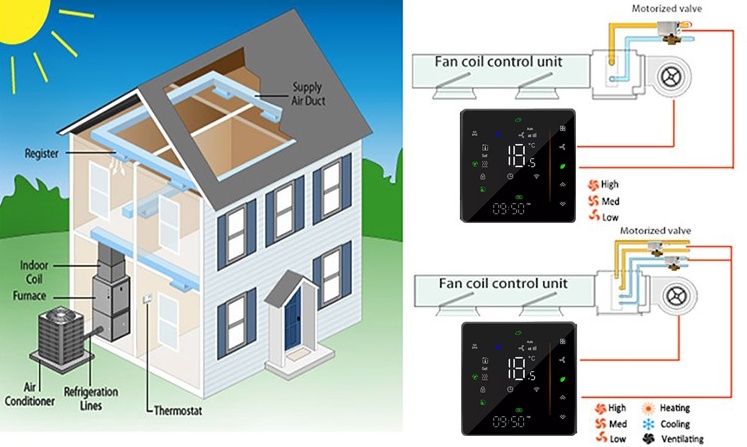
2-pipe systems use a single coil for both cooling and heating. Depending on the season, the system switches between chilled water and hot water. This means the thermostat must handle mode switching (cool/heat).
4-pipe systems, on the other hand, have separate coils for cooling and heating. This allows simultaneous availability of both modes and requires more flexible control.
Because of this fundamental difference, thermostat requirements vary significantly.
Why Thermostat Selection Depends on Pipe Configuration?
The thermostat acts as the control center of the FCU system. It manages:
- ● Fan speed control
- ● Valve actuation
- ● Mode switching
- ● Communication (if connected to BMS)
In a 2-pipe system, incorrect thermostat selection can result in improper mode control or system inefficiency. In a 4-pipe system, insufficient outputs may limit functionality or reduce comfort.
Therefore, understanding the pipe configuration is the first step in selecting the correct thermostat.
Thermostat Requirements for 2-Pipe FCU Systems
For 2-pipe systems, the thermostat must support cooling/heating changeover logic.
Key requirements include:
- ● Changeover function (manual or automatic via water temperature sensor)
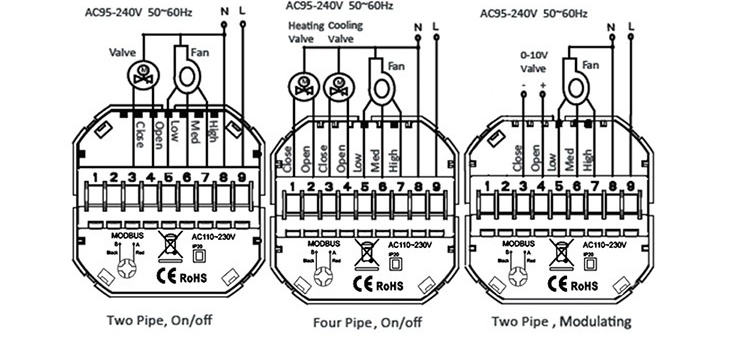
- ● Single valve control (On/Off or modulating)
- ● 3-speed fan or 0-10V fan control
- ● Compatibility with seasonal system switching
In many retrofit or hotel projects, 2-pipe systems are common due to lower installation costs. The thermostat must be able to adapt to seasonal changes without requiring manual intervention.
Thermostat Requirements for 4-Pipe FCU Systems
4-pipe systems require more advanced control capability because cooling and heating are available simultaneously.
Typical requirements:
- ● Independent control of cooling and heating valves
- ● Dual outputs (cool + heat)
- ● Flexible temperature control logic
- ● Optional integration with BMS systems (Modbus/BACnet)
These systems are widely used in office buildings, high-end hotels, and commercial projects where comfort and control precision are critical.
Key Factors When Selecting an FCU Thermostat
Beyond pipe configuration, several technical factors must be considered:
1. Fan Type
- ● 3-speed AC fan (relay control)
- ● EC fan (0-10V modulation)
2. Valve Type
- ● On/Off valve
- ● 0-10V modulating valve
- ● 3-point floating valve
3. Power Supply
- ● 24VAC
- ● 230VAC
4. Control Outputs
- ● Relay outputs
- ● Triac outputs
- ● Analog outputs (0-10V)
5. BMS Integration
- ● Standalone
- ● Modbus RTU
- ● BACnet
6. Installation Requirements
- ● Wall-mounted
- ● EU/UK/86 box compatibility
Each of these parameters must match the actual FCU configuration in the project.
Common Mistakes in FCU Thermostat Selection
Even in experienced projects, selection errors still occur. Common issues include:
- ● Choosing a thermostat that does not support the correct pipe configuration
- ● Mismatch between fan type and control signal
- ● Incorrect valve control logic
- ● Ignoring BMS compatibility requirements
- ● Selecting residential thermostats for commercial FCU systems
Avoiding these mistakes can significantly reduce commissioning issues and improve system reliability.
Conclusion
Selecting the right FCU thermostat requires a clear understanding of system configuration and control requirements.
For a broader overview of available options and system compatibility, you can also refer to this
FCU thermostat project selection guide
By aligning thermostat specifications with system design, engineers and contractors can ensure stable operation, better energy efficiency, and long-term project performance.