Digital Thermostats
Understanding the Difference Between BACnet IP and BACnet MS/TP: Why Choose BACnet IP Over MS/TP?
In today’s rapidly evolving world of building automation systems (BAS), communication between devices is critical to ensuring efficient operation, security, and data management. One of the most widely used communication protocols in BAS is BACnet, an open standard protocol designed to connect various building systems such as HVAC, lighting, security, and more. Two primary communication options stand out when implementing a BACnet-based network: BACnet IP and BACnet MS/TP.
Choosing between these two protocols is crucial, as each offers unique advantages and limitations. In this article, we will compare BACnet IP and BACnet MS/TP, exploring their differences, benefits, and the reasons why BACnet IP is often the preferred choice for modern BAS implementations.
I. How BACnet Protocol Works
BACnet (Building Automation and Control Network) is an open, standardized protocol developed to allow various systems in a building to communicate with each other. This protocol supports multiple physical media, enabling devices across different manufacturers to work seamlessly together, regardless of the underlying hardware or software. BACnet's main strengths include:
1. Reliable Data Exchange: BACnet ensures all devices in a BAS can communicate efficiently and exchange data reliably.
2. Security: Provides secure channels for data transmission, protecting sensitive building system data.
3. Interoperability: Enables devices and software from different manufacturers to communicate, providing flexibility and scalability for system expansions or upgrades.
Among the various communication options, BACnet IP and BACnet MS/TP are the most popular, each utilizing different methods to connect devices within a building.
II. Differences Between BACnet MS/TP and BACnet IP
To understand why one might choose BACnet IP over MS/TP, it’s important to first examine how each protocol works and what sets them apart.
BACnet MS/TP: Master-Slave/Token Passing Protocol
BACnet MS/TP (Master-Slave/Token Passing) is one of the earlier BACnet communication protocols. It uses EIA-485 serial connections and operates in a daisy-chain topology, where devices are connected to each other in a sequential manner. The key characteristics of BACnet MS/TP include:
1. Master-Slave Communication: In this system, one device is designated as the master, which sends requests, while the other devices are slaves that respond to these requests. The communication is controlled through a token-passing mechanism, where only the master node holding the token can transmit data.
2. Slower Communication: Since the token-passing mechanism is sequential, devices can only communicate one at a time, leading to slower data transmission speeds.
3. Limited Security: BACnet MS/TP offers very little in terms of security features, making it more vulnerable to unauthorized access or data breaches.
BACnet IP: Internet Protocol-Based Communication
BACnet IP, on the other hand, connects devices using standard IP addresses over Ethernet or other internet-based networks. The advantages of BACnet IP over MS/TP include:
1. No Token Passing: BACnet IP does not rely on a token-passing mechanism. Instead, it allows devices to communicate freely using their unique IP addresses.
2. Higher Speed and Efficiency: BACnet IP supports much higher data transfer rates, making it faster and more efficient compared to BACnet MS/TP. This enables real-time communication between devices, especially when dealing with complex or large-scale systems.
3. Scalability and Flexibility: BACnet IP can support a much larger number of devices, even across multiple subnets or networks. Devices can be connected over a wide area network (WAN) or through a virtual private network (VPN).
4. Security Features: BACnet IP includes better security protocols, such as encryption and firewall support, which are essential for protecting critical building systems.
III. Key Comparisons: BACnet IP vs. BACnet MS/TP
Let’s break down the key differences between BACnet IP and BACnet MS/TP across several important factors:
1. Bandwidth and Speed
- BACnet MS/TP: Typically operates at a maximum speed of 0.1 MB, meaning that data transfer is relatively slow. Each device on the network has to wait for its turn to transmit data, creating bottlenecks in the communication process.
- BACnet IP: Supports much higher speeds, with bandwidth capabilities exceeding 100 MB. This makes BACnet IP ideal for large-scale systems where multiple devices need to communicate simultaneously without delays.
2. Security
- BACnet MS/TP: Security in MS/TP is minimal, and the protocol lacks the advanced security mechanisms found in modern systems. Data transmitted through MS/TP is vulnerable to interception or unauthorized access.
- BACnet IP: BACnet IP offers much stronger security, including built-in encryption, secure tunnels, and firewall capabilities. This makes it ideal for environments where data protection is critical, such as healthcare facilities, corporate buildings, or industrial plants.
3. Scalability
- BACnet MS/TP: MS/TP is limited to a maximum of 128 devices on the same network, and the token-passing process slows down communication. Adding devices or scaling the network can be cumbersome and inefficient.
- BACnet IP: BACnet IP supports an almost unlimited number of devices, which can be connected across multiple networks. This is ideal for large facilities or buildings with many subsystems, as each device can communicate independently.
4. Installation and Troubleshooting
- BACnet MS/TP: MS/TP installation requires physical wiring and a limited network topology, often resulting in more complex installations. Troubleshooting can also be difficult, as identifying and fixing issues often requires manually inspecting each device or cable.
- BACnet IP: BACnet IP networks are easier to install, especially with the support for wireless communication. Troubleshooting is also simplified because devices can be identified and managed via IP addresses. Issues can be quickly diagnosed and addressed through network management tools.
IV. Why Choose BACnet IP Over BACnet MS/TP?
Given the advantages discussed, it’s clear that BACnet IP is the superior choice for most modern BAS. Here are some compelling reasons to choose BACnet IP over MS/TP:
- Centralized Monitoring: BACnet IP supports centralized control and monitoring, making it easier to manage and oversee building systems from a single point.
- Cost-Effectiveness: While the initial setup may be higher, BACnet IP can significantly reduce operational costs by minimizing the need for extensive cabling, simplifying installations, and requiring less manual intervention.
- Customization: BACnet IP allows for greater flexibility and customization, supporting third-party applications and integrations, as well as scripting languages for specific operational needs.
- Remote Monitoring and Real-Time Alerts: BACnet IP allows for remote monitoring via the internet or VPN, providing real-time alerts for security, health, and safety concerns.
- Wi-Fi Support: With BACnet IP, Wi-Fi can be used for communication, offering additional flexibility in connecting devices without the need for extensive wiring.
- Improved Communication Reliability: BACnet IP eliminates many of the communication issues caused by faulty cables, token collisions, and other physical network limitations common in MS/TP setups.
V. Conclusion
In summary, while both BACnet IP and BACnet MS/TP are effective communication protocols for building automation systems, BACnet IP offers clear advantages in terms of speed, scalability, security, and ease of installation. As building systems become more complex and interconnected, the need for reliable, high-performance communication networks has never been greater. BACnet IP is the protocol of choice for modern BAS, supporting efficient, secure, and scalable operations.
When designing or upgrading a building automation system, businesses and organizations should prioritize BACnet IP for its flexibility, robust security features, and future-proof capabilities. Whether you're managing a large corporate facility, healthcare institution, or educational campus, BACnet IP ensures your building systems communicate seamlessly, securely, and efficiently.
Beris Tech BACnet Thermostat For Building Air Conditioning BMS
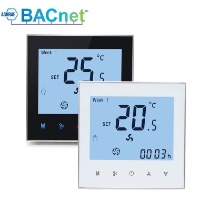
2-pipe/ 4-pipe BACnet thermostat For FCU
